

When life changes — suddenly or slowly — our minds aren’t the only things affected. Our bodies feel it too. Whether you’re going through a separation, grieving a shift in family life, wrestling with some medical news or trying to make a big decision, your nervous system is working hard behind the scenes.
It’s Not Just in Your Head
When we face emotional upheaval, our nervous system flips into high alert. That can look like fight (anger), flight (restlessness), or freeze (shut down). These reactions are normal — even useful, short term. But if you live there too long, the stress gets stored, and you stop feeling like yourself.
That’s where self-regulation comes in. Self-regulation is your ability to manage your emotions, behaviours and thoughts to achieve your long-term goals and adapt to new situations.
Self-regulation isn’t about “staying calm” all the time. It’s about learning how to settle your system so you can think clearly, act intentionally, and respond in ways you feel good about later.
Small Moves, Big Shifts
Here are eight ways to begin calming your system, drawn from clinical research and mind-body practices:
1. Breathe slower than you think you need to.
Exhale longer than you inhale. This signals to your brain that you’re not in danger.
2. Get present through your senses.
Touch something textured, smell something familiar, feel your feet on the ground, say five things you can see right now.
3. Take a walk around the block — or just the room.
Movement doesn’t need to be intense to be effective.
4. Create a “safe place” image.
Picture a location (real or imagined) where you feel calm, and visit it in your mind when overwhelmed.
5. Use cold water.
Splash your face or run cold water over your wrists — this can signal your body to reset and reduce emotional intensity.
6. Hum, sigh, or sing.
Your voice can stimulate the vagus nerve, which helps your body relax.
7. Tense and release.
Try progressive muscle relaxation: clench a body part for 5 seconds, then release. Move through different areas.
8. Repeat a calming phrase.
Something like, “This feeling won’t last forever,” or “Right now, I’m safe.” Repetition helps settle the mind.
Begin with You
Most law firms don’t talk about the nervous system — but we do. At Clean Break, we seen how it shapes everything. When your system is stuck in fight, flight, or freeze, any legal process can feel ten times harder than it needs to. But when you feel grounded? Decisions get easier. Conversations become more productive. You don’t just survive the process — you start to move forward with more steadiness and self-trust.
That’s why we sometimes encourage our clients to treat their own self-regulation as part of the legal strategy when they engage us to help with their separation.
Because when your nervous system is supported, so much more becomes possible. Your thoughts are clearer. You respond instead of reacting. You communicate what matters without shutting down or losing your footing. Even your physical body begins to shift — sleep may come more easily, stress symptoms ease, and energy levels begin to feel more stable.
Begin with you. The rest will fall into place.
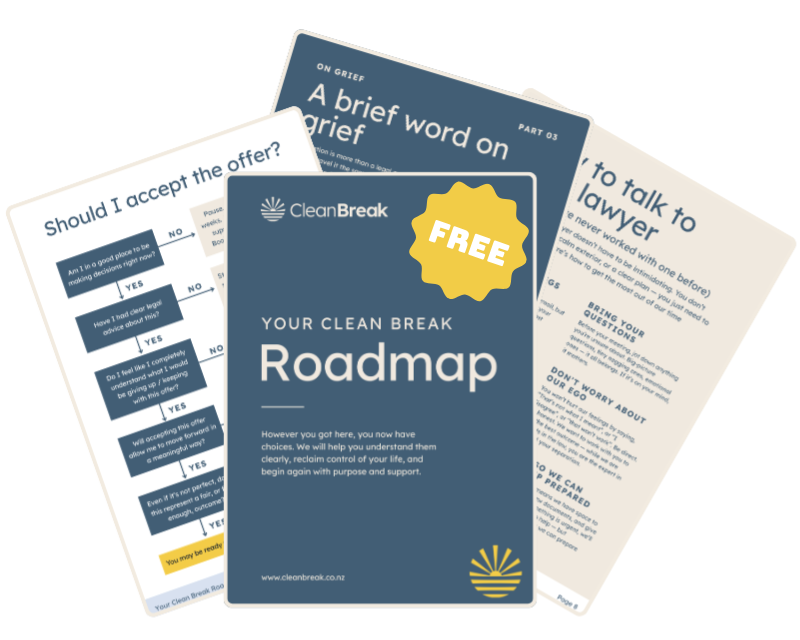
If you’d like a little more guidance, download the Clean Break Roadmap — your free, step-by-step guide through separation, designed to help you feel calmer, clearer, and more in control.
Comments (0)